
Last updated November 16, 2026
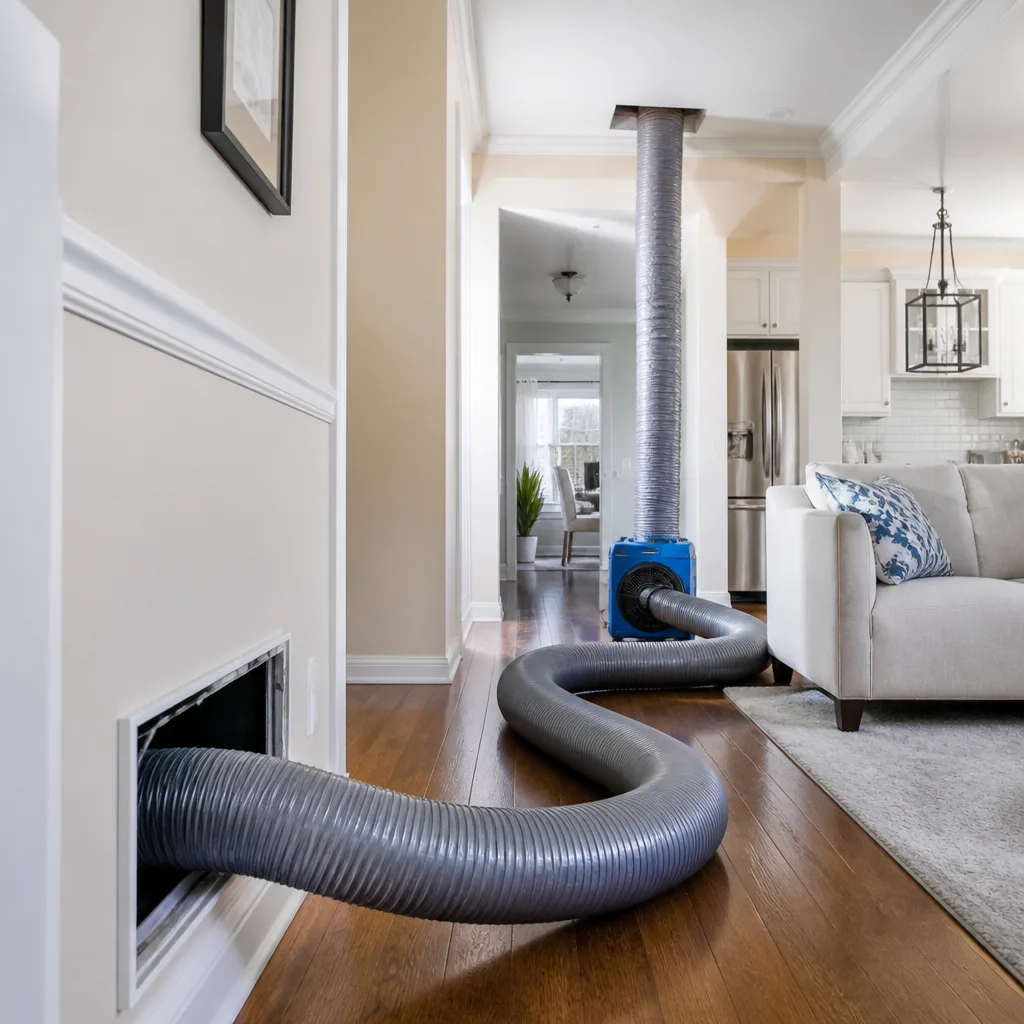 Whole-home duct cleaning
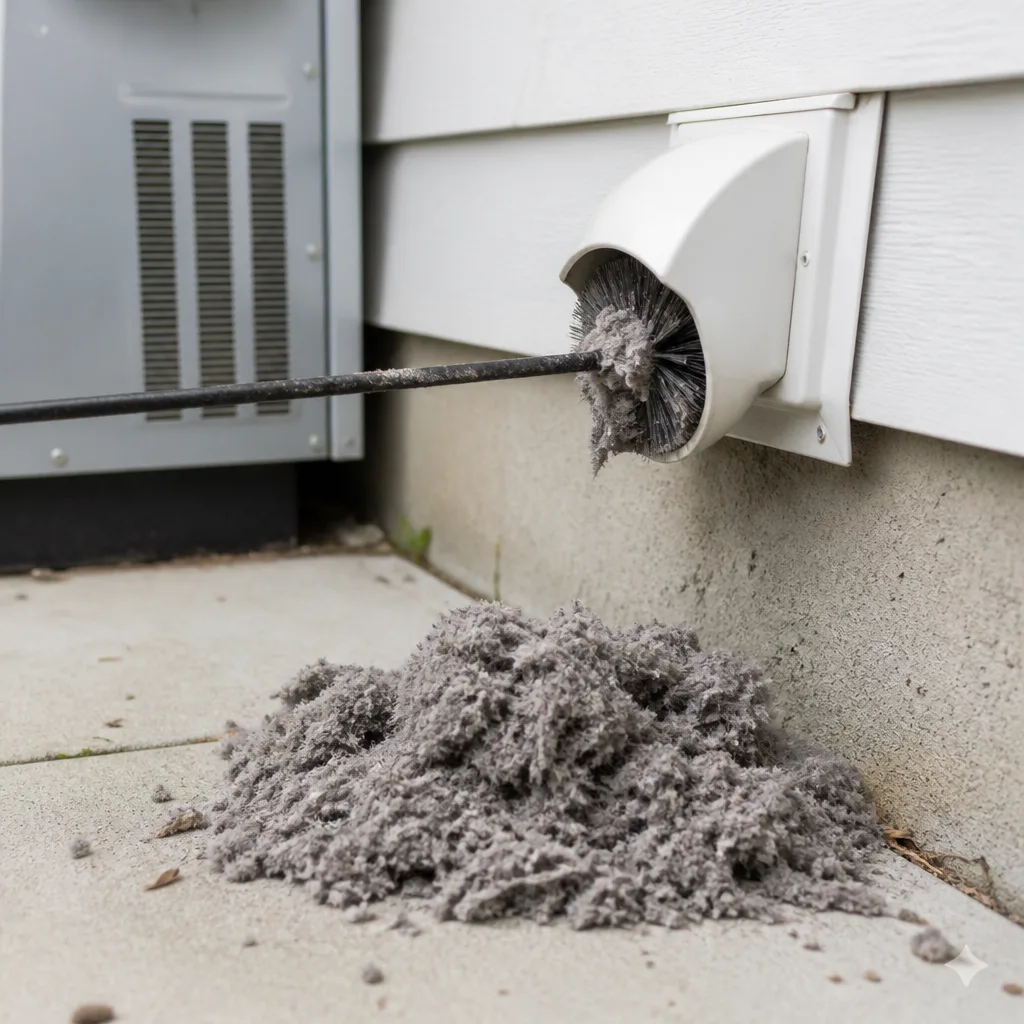 Dryer vent cleaning
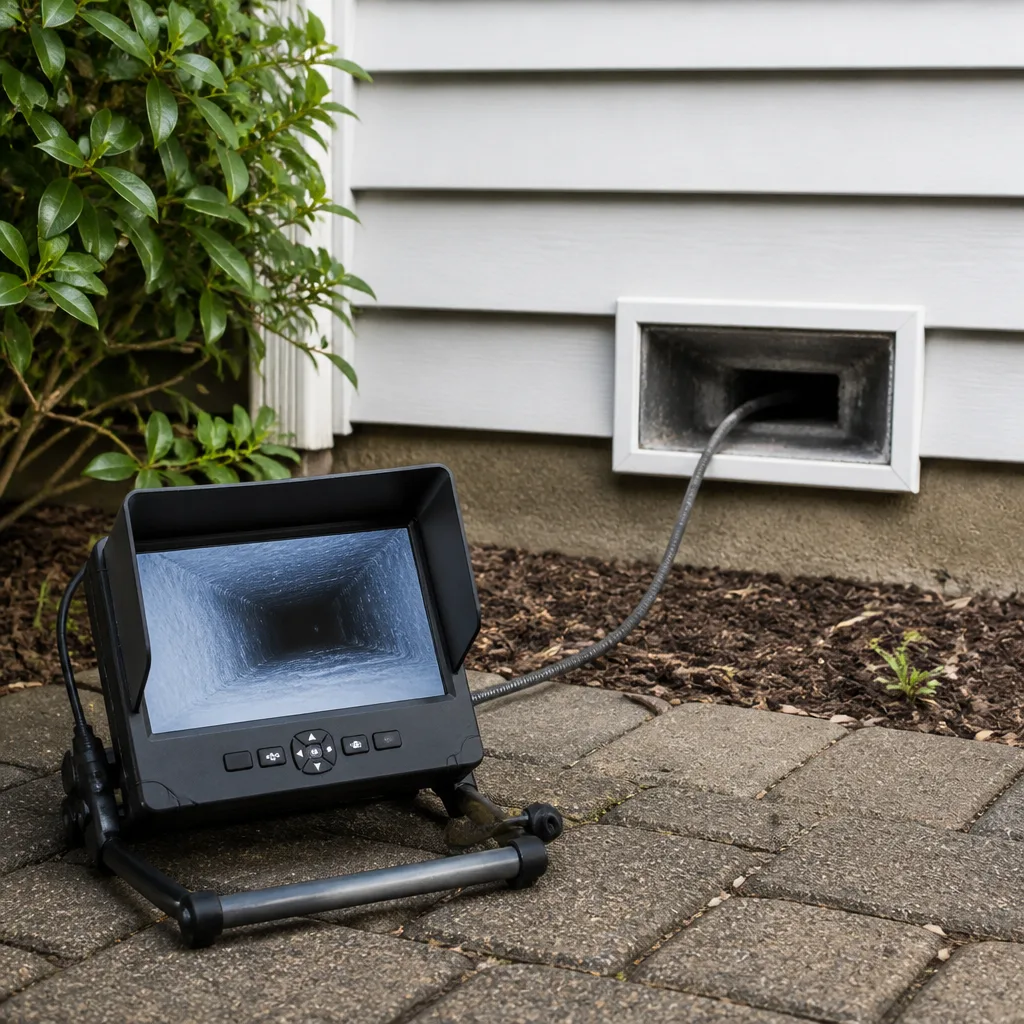 Camera inspection
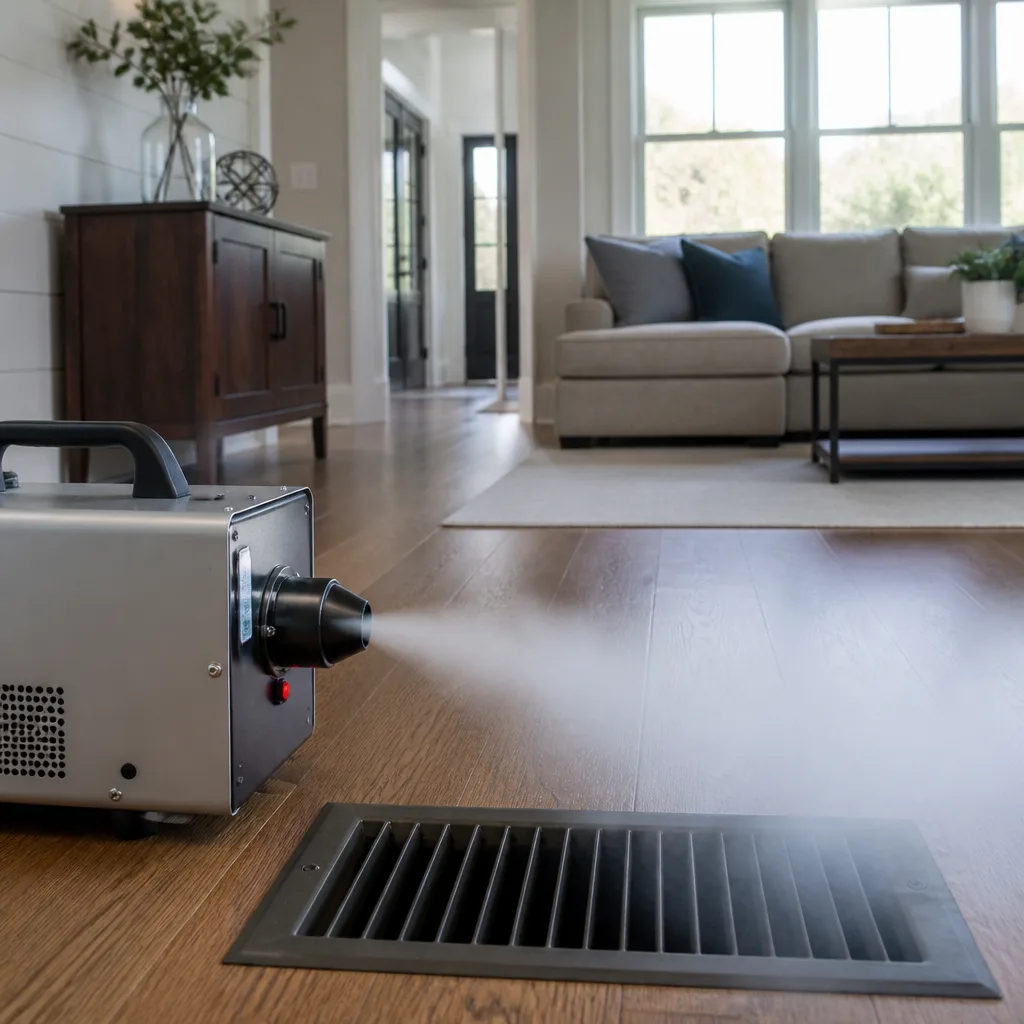 Sanitizing & deodorizing
Whole-system duct and dryer vent check with before-and-after photos - you see exactly what came out of your vents
That "$99 whole-house special" is a bait ad - the real number appears once they are in your hallway, or the "clean" is a shop-vac at the register. We photograph the inside of your ducts before and after instead.
How to Hire an Air Duct Cleaning Contractor in Provo: A Step-by-Step Guide
Anyone with a shop vac and a printed invoice can legally offer duct cleaning in Utah. There’s no statewide license that separates a trained ventilation technician from a guy who watched two videos and bought a used vacuum. That’s the uncomfortable reality behind the whole market here, and it means the vetting burden falls on you, the homeowner. The single most useful question you can ask a contractor before letting them inside is: “What’s the CFM rating of your vacuum collection unit?” Most low-tier operators won’t know the answer. In this guide, you’ll learn the exact equipment questions that separate serious contractors from coupon operations, why NADCA membership matters in an unregulated state, and how to write a scope of work that holds anyone accountable. We’ll walk through it the way we do with Provo homeowners who want proof before they book.
Quick Answer
To hire an air duct cleaning contractor in Provo, ask three questions before anything else: the CFM rating of their vacuum unit, whether they use negative pressure containment, and what type of brush agitation they run. Then verify NADCA membership online, request a written scope of work listing every access point and register, and confirm the price is set per system before work begins. A legitimate contractor will answer all of this without hesitation, walk your home before quoting, and put the final figure in writing. A coupon operation will dodge the equipment questions and quote you over the phone.
Styles & brands we work with
- Whole-home duct cleaning
- Dryer vent cleaning
- Camera inspection
- Sanitizing & deodorizing
Table of Contents
- Why Utah’s Unregulated Market Makes Vetting Essential
- The Equipment Questions That Disqualify Bidders
- Why NADCA Membership Matters in Provo
- Red Flags Specific to the Provo Market
- What a Legitimate Pre-Job Walkthrough Looks Like
- How to Write a Scope of Work That Holds Up
- A Step-by-Step Hiring Process
- Common Mistakes to Avoid
- When to Call a Professional
- Frequently Asked Questions
Why Utah’s Unregulated Market Makes Vetting Essential
Utah doesn’t license duct cleaning as a trade. No state exam, no continuing education requirement, no equipment minimum. Compare that to electrical or plumbing work, where a license is a legal gate. Duct cleaning has no gate. Anyone can print a flyer, buy a portable vacuum from a hardware store, and knock on doors along Center Street. That’s not a knock on every small operator. Some run tight, honest businesses with decent gear. But the lack of a barrier means a homeowner in Provo can’t assume competence from a business card or a magnetic sign on a truck.
What fills the gap is voluntary certification. NADCA, the National Air Duct Cleaners Association, runs a certification program that requires documented equipment standards, technician training, and adherence to a code of ethics. It’s not government-enforced, so nobody checks it for you. You check it.
The practical effect: in most states there’s a baseline you can fall back on. In Utah, you’re the baseline. That makes the hiring process itself the safety net, and it’s why we wrote this guide around technical questions instead of generic advice like “read reviews.” Reviews tell you whether someone was polite. They don’t tell you whether the vacuum pulled 3,000 CFM or 400.
Provo adds a wrinkle. Utah Valley’s housing stock runs from mid-century bungalows near downtown to newer builds out toward the east bench, and the duct systems look nothing alike. Older homes often have sheet-metal trunks with branch runs that have never been sealed or cleaned. Newer construction might use flex duct with tight bends that trap debris. A contractor who works in Provo regularly knows both. Someone driving down from another county for a coupon special probably doesn’t. For a broader look at what professional air duct cleaning involves, it helps to understand the process before you interview anyone.
One more local factor: Provo sits in a valley where winter inversions trap particulate matter against the Wasatch Range. Homes here tend to run furnaces hard for months at a stretch, and dust loads build up in the return system. That’s not a reason to panic-clean every year, but it does mean the quality of the cleaning matters more than the frequency. A weak vacuum that stirs debris loose without capturing it can leave more contamination in the air than it removes. That’s the scenario the equipment questions are designed to catch.
The Equipment Questions That Disqualify Bidders
The equipment questions are where a serious bidder separates from a shopper with a leaf blower. Ask them on the phone, before you book. You’re not trying to become an HVAC technician; you’re listening for whether the person on the other end knows their own tools. Here’s what to ask and what a good answer sounds like.
1. What is the CFM rating of your vacuum collection unit?
CFM is cubic feet per minute, the measure of how much air the collection unit pulls. A contractor-grade truck-mounted or high-powered portable unit moves thousands of CFM. A shop vac moves a few hundred. The point isn’t the exact number, it’s whether they know it. Ask, then listen. “I’d have to check” from a professional shop is fine if they follow up. A blank pause, a deflection, or “we use the best equipment” with no detail is your answer. This single question filters out more discount operations than any other.
2. Do you use negative pressure containment, or push-pull?
Negative pressure means the collection unit pulls air out of the system so the whole duct network is under suction while brushes agitate the duct walls. Debris gets captured instead of blown into your living space. Push-pull or “air sweep” methods rely on compressed air to knock debris loose, and without strong collection on the other end, some of it ends up in your rooms. A good contractor runs negative pressure with containment, and uses equipment built for it. We run Abatement Technologies containment tools, which is the standard in professional remediation, because the whole point of cleaning a duct is capturing what you dislodge. Ask directly: “Will the system be under negative pressure the entire time the brush is running?”
3. How do you agitate the duct surfaces?
Vacuuming alone doesn’t remove stuck-on debris. You need physical contact with the duct wall, which is what contact cleaning means. Rotobrush systems are built around this: a rotating brush head that physically scrubs the duct interior while the vacuum pulls debris out. The alternative is compressed-air whipping, which loosens some debris but doesn’t contact the wall. If a contractor can’t describe their agitation method in one sentence, they probably don’t have a dedicated one. “We blow it out” is not a cleaning method.
4. What equipment does the collection side use?
Ask what brand of collection unit and containment gear they run. Professional shops use named equipment because it’s what the trade trusts. Nikro is one brand you’ll hear from contractors who do real extraction work. If the answer is “an industrial vac from the hardware store,” that’s a different tier of service. Not necessarily fraud, but not a professional-grade clean either.
5. Do you service integrated air quality components?
Many Provo homes have whole-home air quality equipment: Honeywell or Aprilaire humidifiers, filtration systems, or fresh-air exchangers tied into the ductwork. Cleaning that system without understanding the components can damage sensors and controls. Ask whether the contractor is trained on integrated air quality systems or only on standalone ducts. This is one of the questions that most often sorts out the specialists from the generalists.
Why NADCA Membership Matters in Provo
NADCA membership is a meaningful signal in Utah specifically because it’s voluntary. In a licensed trade, certification is a legal floor. In duct cleaning, it’s a choice, and a contractor who chose it cared enough to meet an outside standard. NADCA membership isn’t a guarantee of quality, but it’s a useful filter, and verifying it takes about thirty seconds.
Here’s the process:
- Get the contractor’s company name exactly as it appears on their advertising, not a DBA or a phone-only brand.
- Go to the NADCA website and use the membership lookup tool.
- Search the company name. If they claim certification, the individual technician’s name should appear under the company record.
- Ask to see the certification on site. Members carry documentation.
Why does this matter in Provo? Because the “air duct cleaning” market along the I-15 corridor includes a lot of transient operations. Some are regional franchises. Some are single-truck companies that rebrand. Some are telemarketing firms that sub the work out to whoever answers the phone that week. A NADCA record tells you the company exists, has a fixed business identity, and has committed to documented standards. That’s a lot of confirmation from a thirty-second search.
We’re not gate-keeping on membership. Plenty of competent contractors haven’t joined. But if a contractor claims NADCA membership and the lookup doesn’t find them, that’s a serious credibility problem, and you should walk. The bigger point is that in an unregulated state, any voluntary credential you can independently verify is worth the two minutes it takes.
We’ll just note our own position: our technicians have up to experience, we work with professional equipment brands including Rotobrush, Nikro, Honeywell, Aprilaire, Abatement Technologies, and Guardsman, and we’re happy to walk a Provo homeowner through all of the above before they hire us. Ask the questions, get answers, decide for yourself.
Red Flags Specific to the Provo Market
Provo’s duct cleaning market has a few patterns worth naming, because they show up here more than in some other cities along the Wasatch Front. If you’re hiring in Provo, watch for these.
The $99 whole-house special
This is the classic bait-and-switch. The advertised price covers what the industry calls a “main trunk only” clean, meaning one or two feet of duct at the furnace, with none of the branch runs or registers. The crew arrives, walks the house, and explains that your actual system is much bigger than the price covered. The upsell can run into the hundreds quickly. Sometimes more if they add “sanitizing” or “sealing” services on the spot. The tell: a whole-house price quoted without knowing the size of the house or the number of registers. A real quote depends on the system, which means it depends on the walkthrough.
A price quoted over the phone with no walkthrough
No legitimate contractor can price a Provo home’s duct cleaning sight-unseen. Duct systems differ in size, branch count, accessibility, and condition. A crew that quotes you $249 before asking a single question isn’t pricing your job, they’re pricing a category, and the real number appears later. That’s the setup for the upsell.
Pushy add-on services
Watch for pressure to buy sanitizing, duct sealing, or “premium filtration” upgrades once the crew is inside. Some add-ons are legitimate services when the system genuinely needs them. Some are chemistry theater. If the technician arrives and immediately tells you the ducts are contaminated, ask to see what they’re seeing. Refuse to authorize work you didn’t agree to in writing before the crew entered the house.
No written scope of work
Either the contractor provides a written scope before starting or you’re exposed. Anything verbal is unenforceable. This is especially problematic with cash-only or door-to-door operations. If they can’t produce a written scope with the number of registers, returns, and access points listed, there’s no accountability mechanism.
No company identity beyond a phone number
If the answering service picks up as “your local duct cleaning service” without a company name and address, that’s the telemarketing pattern. Ask for the company name and expected arrival window. If they can’t give you one, that’s your answer.
Equipment questions dodged or answered vaguely
We covered this in detail above, but it’s worth repeating here as a red flag: any contractor who can’t or won’t name their CFM rating, their agitation method, or their containment setup is likely running consumer-grade equipment. That’s not a quality clean.
What a Legitimate Pre-Job Walkthrough Looks Like
The pre-job walkthrough is where the serious contractor does most of their thinking, and it’s where a lot of discount operations skip the work entirely. Here’s what a real walkthrough involves, in order.
Step 1: Walk the whole system, not just the furnace. A legitimate technician traces every duct run in the house. They open or look inside registers, inspect return air boxes, check the furnace plenum, and confirm where the system’s branches connect. This isn’t a sales tour; it’s an assessment. The point is to know how many access points will be needed and where they’ll cut, because duct cleaning almost always requires cutting small access holes at strategic points.
Step 2: Check for structural issues. Loose fitting, disconnected flex, crushed runs, gaps at the plenum. If any of that shows up, cleaning alone won’t fix the air quality problem. A duct repair service is the correct next step before cleaning. In our experience, a lot of Provo homes with chronic dust complaints have a disconnected duct somewhere they can’t see, and cleaning without repair just moves the problem. That’s why we offer duct repair as a standalone service.
Step 3: Check the return air box. The return is often the dirtiest part of the system because it pulls air back from every room. A serious contractor confirms return box accessibility and notes any obstacles like water heaters, furnaces, or built-in cabinetry around the return grille.
Step 4: Discuss the dryer vent. A full ventilation assessment includes the dryer vent, which is a fire-safety component most homeowners forget about. A legitimate walkthrough notes the dryer vent location and whether it’s a reasonable addition. You can read more about that service on our dryer vent cleaning page.
Step 5: Produce a written quote on site. After walking the system, the contractor gives you a written quote before starting work. That quote covers the entire system per-job, not per-vent or per-register. If they can’t or won’t put it in writing, don’t proceed.
What disqualifies a walkthrough: a contractor who steps in the front door, glances at the thermostat, and quotes a price before looking at a single register. That’s not assessment, it’s a sales script. And a contractor who arrives without the gear to do a walkthrough properly, like a flashlight, is a contractor who skipped the process.
How to Write a Scope of Work That Holds Up
The written scope of work is your accountability mechanism. In an unregulated state, it’s the only document with any teeth. Whether the contractor provides a scope template or you draft one, the contents should cover the following.
Everything the scope of work should include
- Number of registers and returns covered. List every register and return air grille by room or location. If the contractor cleans your system, this list tells you exactly what was cleaned. Anything not on the list is not their job.
- Number and location of access points. The contractor may need to cut access holes in the ductwork. The scope should state how many and where.
- Return air box, plenum, and main trunk explicitly named. These components are frequently skipped by discount operations that only do a “main trunk clean.” If return boxes aren’t named, they’re not covered.
- Equipment to be used. Name the collection unit, agitation method, and containment setup. If the contractor won’t specify, that’s a red flag.
- Before-and-after photographs. The scope should commit to providing photos of the ductwork before and after cleaning, of your specific system. Photos are the best proof you have that the work was actually done.
- Price per system, agreed before work starts. Not per vent, not a teaser cleaning that converts to an upsell. One flat price for the whole system. In writing, before the crew gets out of the truck.
- Dryer vent line item. If dryer vent cleaning is part of the job, list it separately with its own scope.
- Post-clean verification. The scope should say the technician will walk you through the access points after cleaning so you can see the result.
Write the scope before work starts. Have the contractor sign or confirm it in writing (text message counts). If they push back on any line, that pushback is itself useful information. The written estimate sets the final price. Whatever they quote verbally should match the document, and if it doesn’t, ask why before anyone starts cutting access holes.
A Step-by-Step Hiring Process
Here’s the full sequence, from first search to sign-off. We use it with every Provo homeowner who wants a straight answer.
- Confirm the company exists as a company. Search the business name online. Look for a real website, a physical business presence you can find, and an address outside a PO box. Cross-check with the Utah Division of Corporations business entity search. It’s free and takes two minutes.
- Ask the equipment questions. CFM rating, negative pressure, agitation method, storage brand, integrated IAQ capability. Listen for specific answers, not general claims. Dismiss anyone who can’t answer.
- Verify NADCA membership. Take the thirty seconds to search the NADCA directory. If membership is claimed and not found, disqualify the bid.
- Book a walkthrough. Not an estimate over the phone. Book an on-site visit. Confirm the walkthrough includes a full system inspection, not just a furnace glance.
- Observe the walkthrough. Does the technician trace the duct runs? Look at returns? Note structural issues? Ask about the dryer vent? A real assessment looks like diagnostic work, not a sales tour.
- Get the estimate in writing. Review the scope against the checklist above. Confirm: register count, return count, access points, equipment, before-and-after photos, one flat price.
- Confirm dryer vent scope separately. If they’re cleaning the dryer vent too, get that scope in writing as well. Ask if they’ll run a lint assessment.
- Watch the work. You don’t need to hover, but a quick check during the job doesn’t hurt. Confirm the negative-pressure equipment is running the entire time the brush is in the ducts.
- Walk the result. Do a post-clean walkthrough of the access points. Check the before-and-after photos against what you can see. Confirm all registers and returns on the scope were done.
- Keep the documentation. Save the scope and photos. If you ever sell the home, a documented duct cleaning is a small but real credibility point.
See the difference
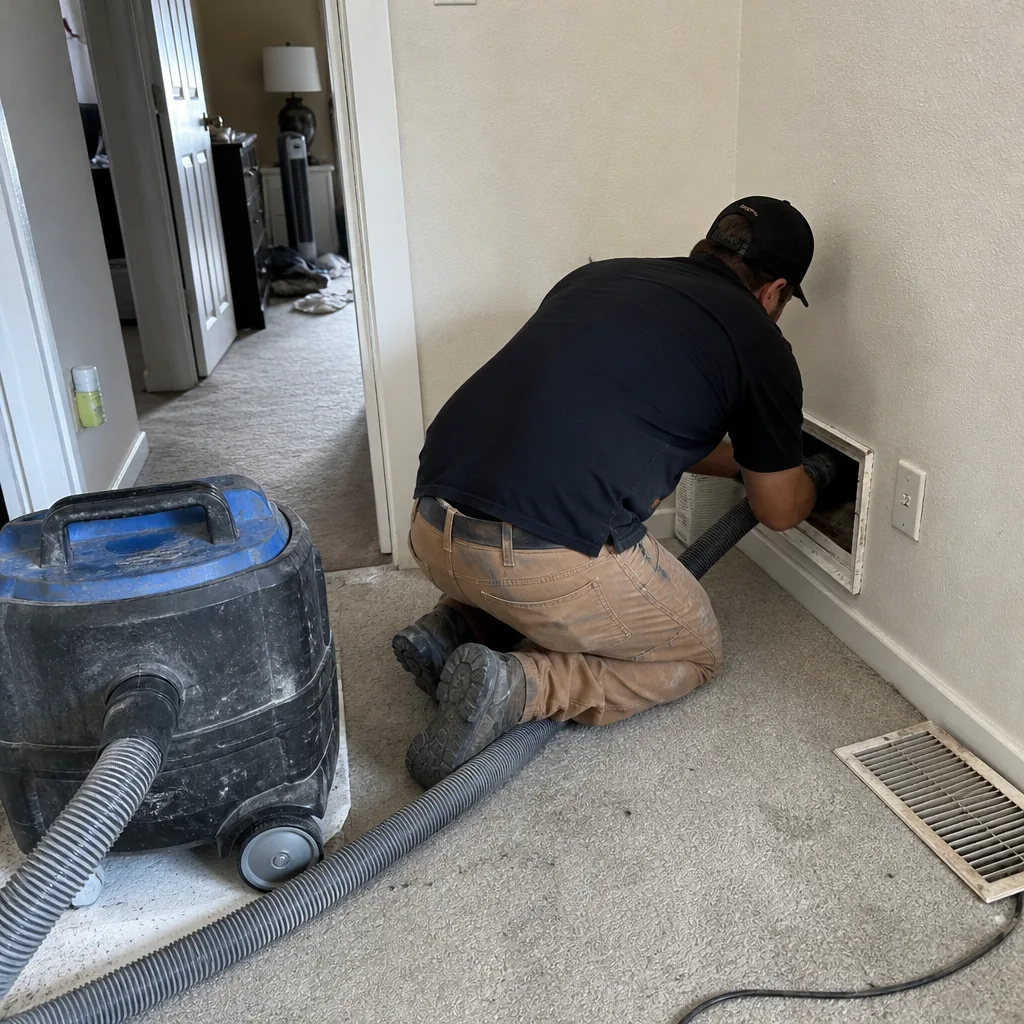 Before
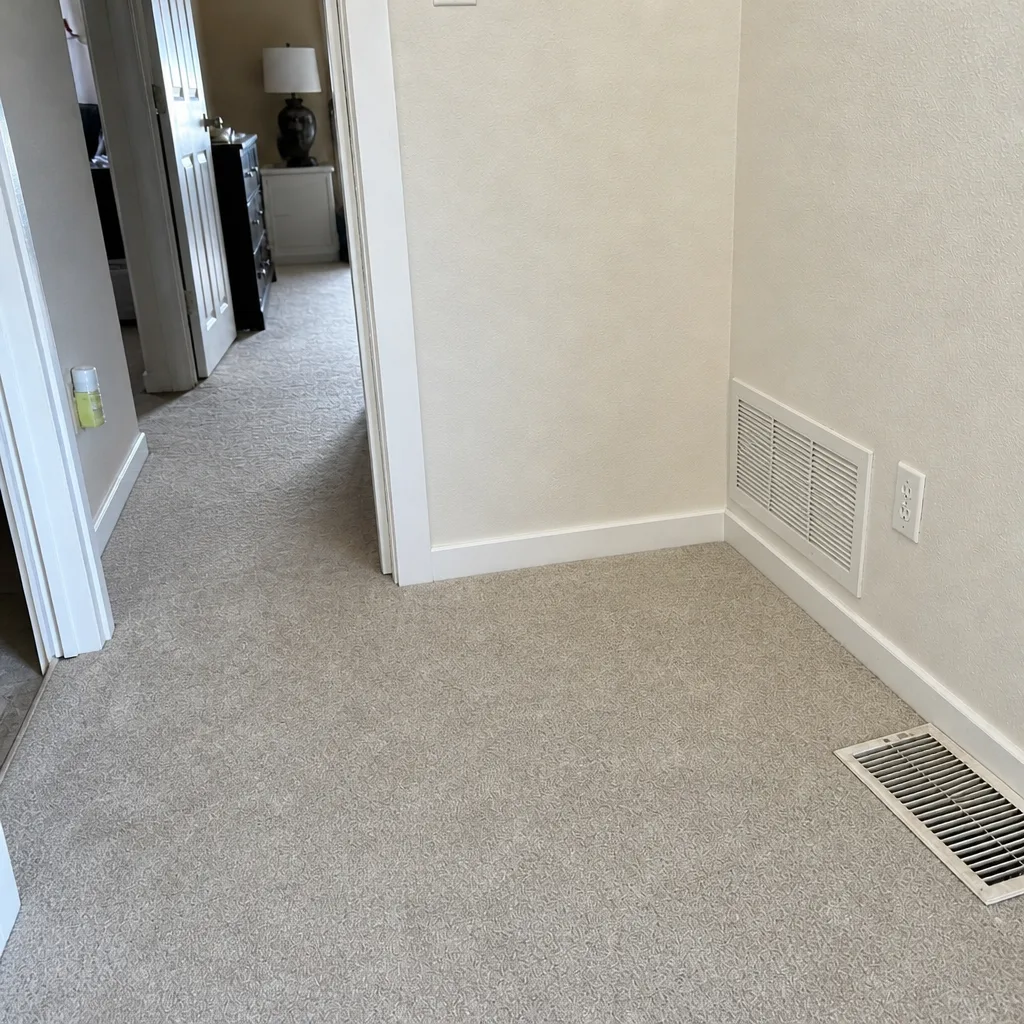 After
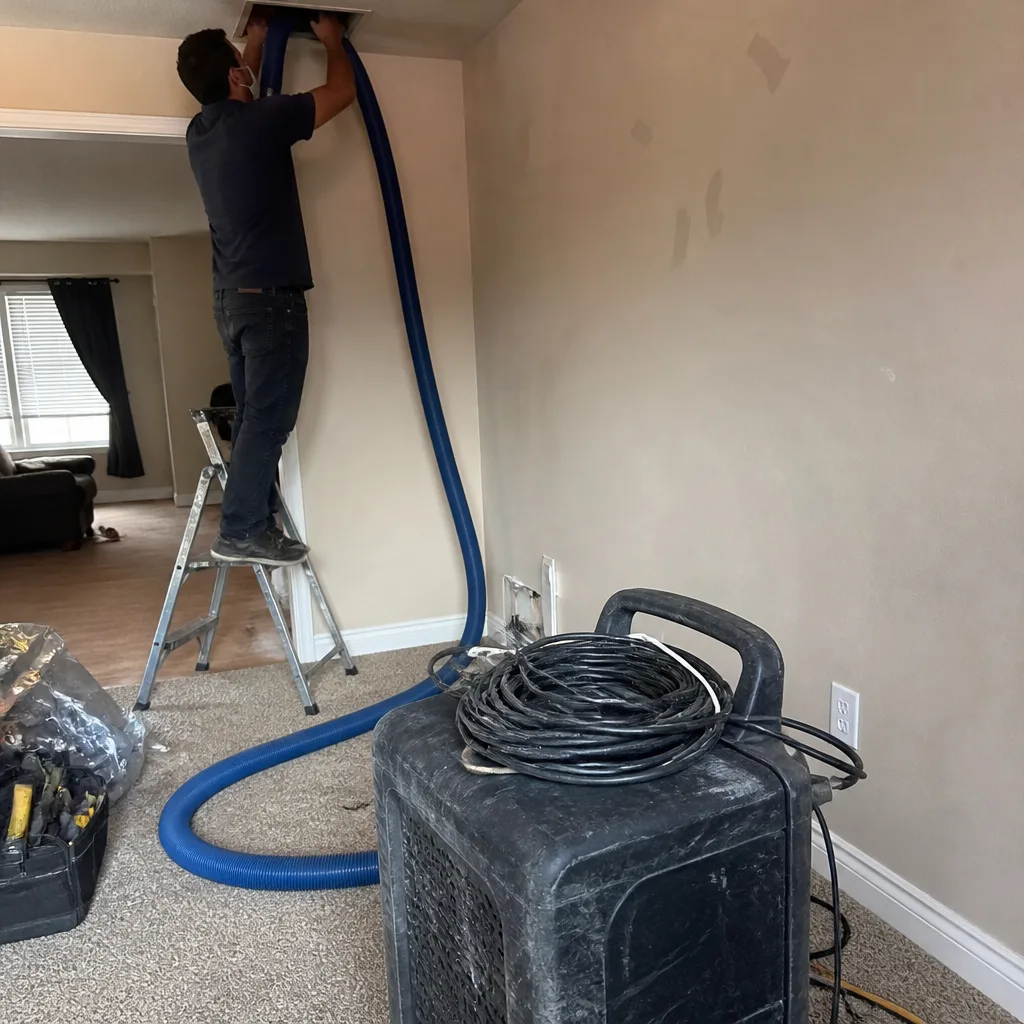 Before
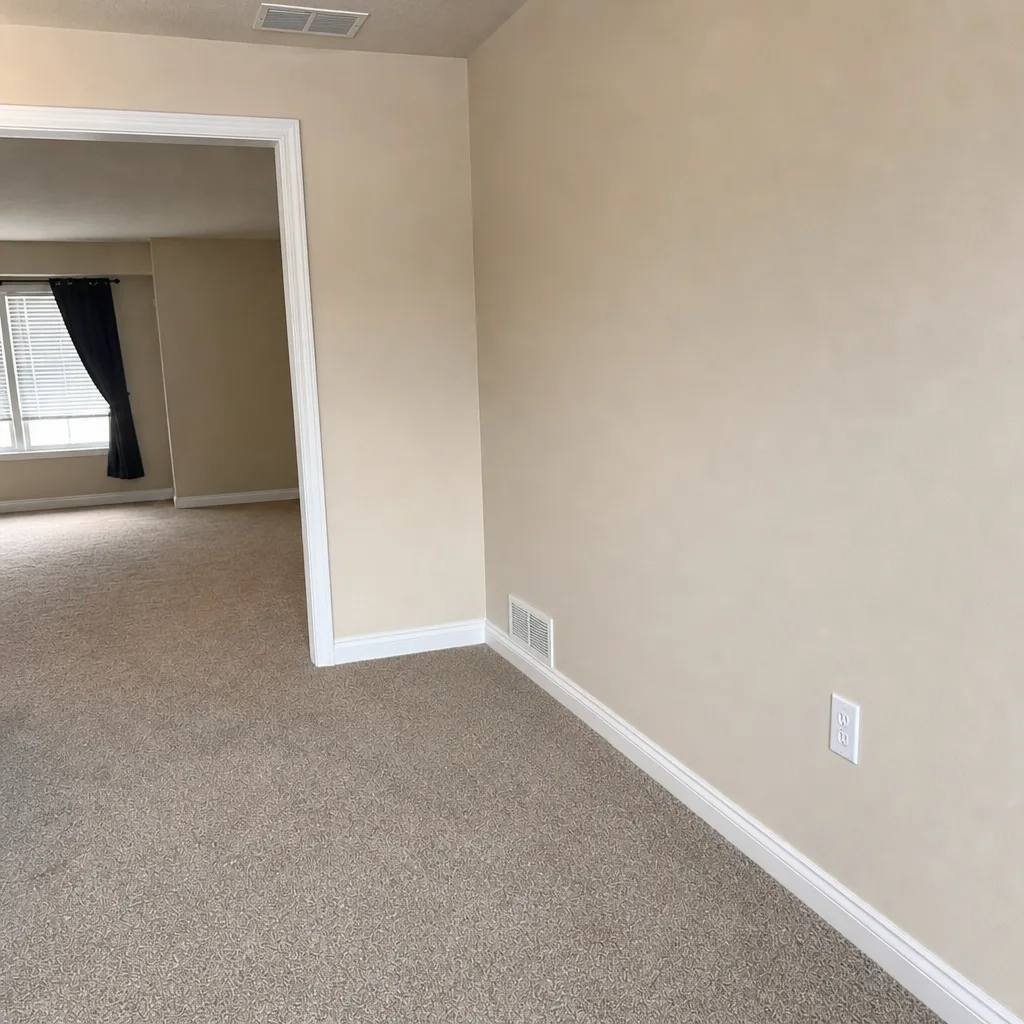 After
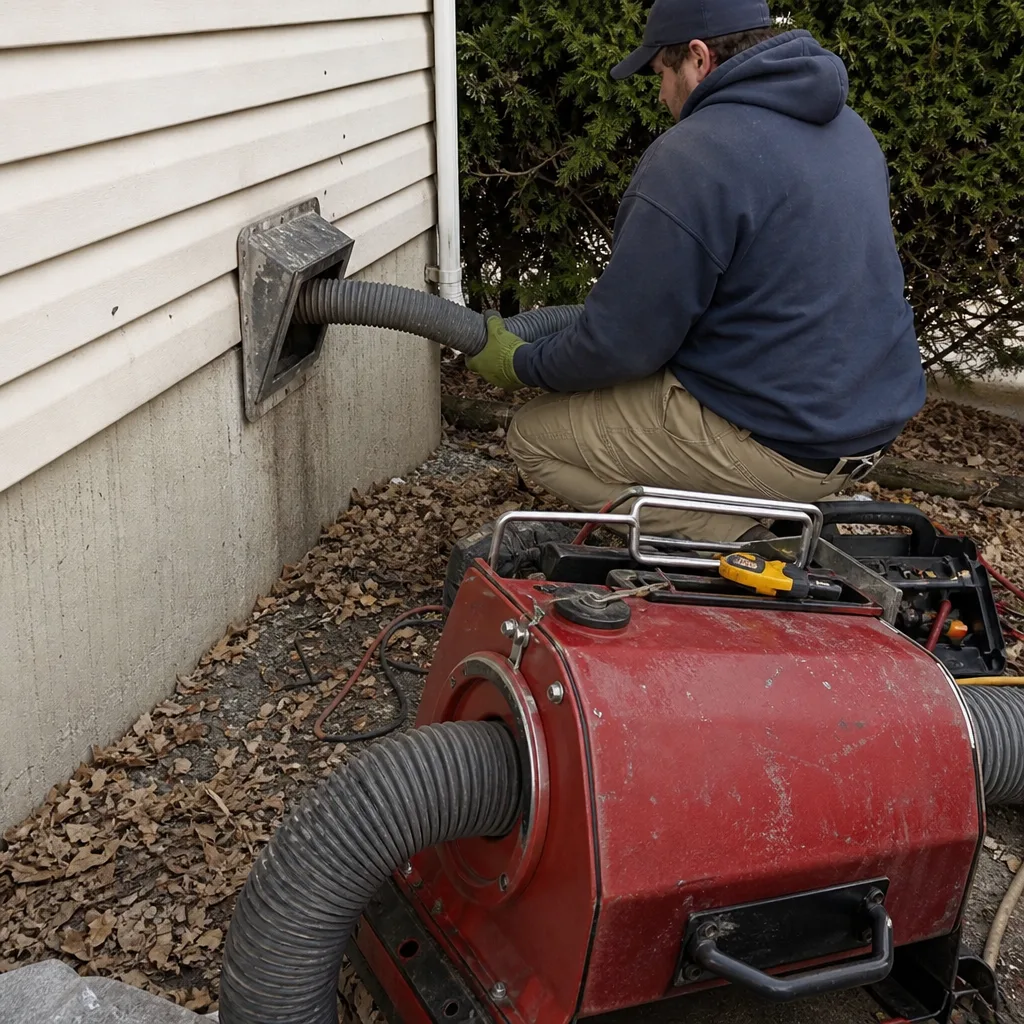 Before
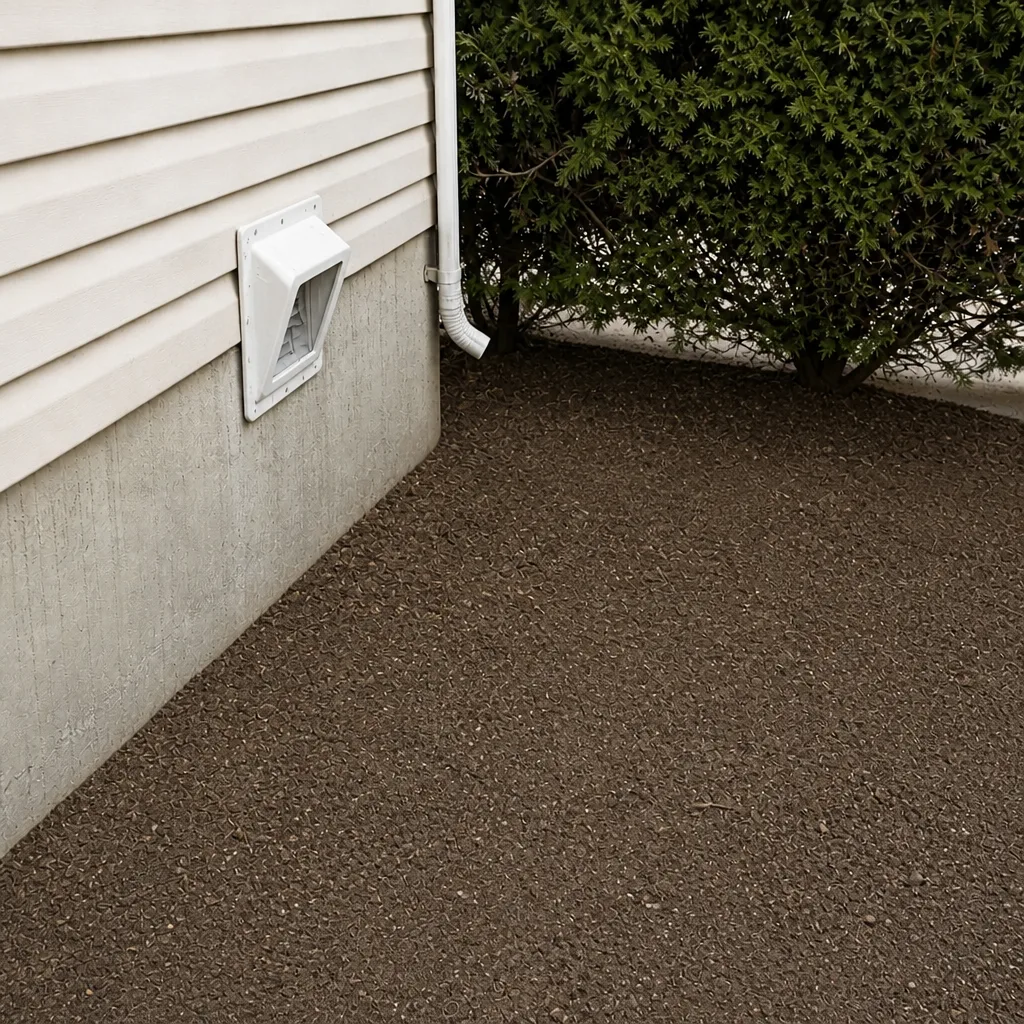 After
How Much Does Duct Cleaning Actually Cost in Provo?
A legitimate whole-system duct cleaning in Provo typically falls into the ranges below, depending on system size and condition. These are estimates, and the written estimate sets the final price. The important number for comparison is the whole-system range, not a per-vent figure. Any contractor quoting per-vent is setting up creep.
| Service | Typical Range |
|---|---|
| Whole-house duct cleaning, standard system | Varies by size and branch count |
| Larger or multi-zone systems | Higher, quoted after walkthrough |
| Dryer vent cleaning | Quoted separately by run length |
| Duct repair, when needed | Quoted separately after structural assessment |
We’ve deliberately left the numbers out of the table because scope varies that much, and per-vent pricing is a trap. What matters is: no per-vent pricing, no teaser coupons, one flat price per system, agreed before work starts.
For comparison, the “$99 special” pattern usually means a cleaning that covers only the main trunk. Once the crew arrives and assesses the system, the price to actually clean every branch and register can jump. That’s why the honest whole-system range from a professional contractor is what you should be comparing against, and why the coupon price on the flyer is never the number you end up paying.
If someone quotes you a flat whole-house price over the phone with no walkthrough, treat it as a placeholder, not an estimate. A Provo home with a finished basement and multiple zones takes a different scope than a single-story bungalow. There’s no honest way to price both at one number without a site visit.
How Long Does Duct Cleaning Take, and How Often Should It Be Done?
Whole-system duct cleaning typically runs a few hours for a single crew, longer if the home is large or the system has significant contamination. The number of access points, the number of branch runs, and the condition of the ducts all affect timing. Duct repair, when needed, is a separate scope and usually scheduled separately.
Frequency is more nuanced than the “every 2-3 years” advice you see everywhere. For most Provo homes, we tell people to check a few simple things instead of following a clock:
- Visible debris at registers. If dust puffs out when the system runs, that’s a sign.
- Dust buildup in rooms faster than usual. A change in dust load often points to the return system.
- Recent renovation. Drywall dust is one of the worst offenders for duct contamination. Renovation is one of the most common reasons Provo homeowners call us.
- Recent purchase. If you bought a home without documentation of prior cleaning, a baseline clean is reasonable.
- Allergy symptoms in the household. Not a diagnostic tool, but worth noting if the family has allergies and the ducts haven’t been serviced.
- Dryer vent lint buildup. Dryer vents should be checked more often than ducts, because the fire risk is real. The NFPA links reduced home fire risk directly to dryer vent cleaning.
If any of these apply, get an assessment. If none apply and the system was cleaned recently with documentation, you can probably wait. Duct cleaning is scheduled maintenance, not an emergency service.
Common Mistakes to Avoid
- Hiring on price alone. The cheapest quote in Provo is usually the most expensive clean. A coupon price almost always means a main-trunk-only clean that converts to an upsell once the crew is inside. Ask for the whole-system figure first.
- Skipping the walkthrough. Any quote that isn’t based on an on-site inspection of your system is speculative. That includes the estimate that arrives in your text messages from a “sales department” you’ve never met. Book the walkthrough.
- Not verifying NADCA membership. If a contractor claims it, check the NADCA directory. It takes thirty seconds. If they aren’t listed, that’s a signal.
- Accepting the “main trunk only” cleaning without realizing it. A lot of cheap quotes only clean the trunk and furnace plenum. Branch runs and registers are left untouched. Confirm the scope lists every register and return.
- Skipping the dryer vent. Dryer vent cleaning is a fire-safety service, not an optional add-on. If your dryer vent hasn’t been cleaned recently, add it to the scope.
- Not requiring before-and-after photos. Photos of your specific ducts, before and after, are the only reliable proof the work was done. Ask for them in the scope.
- Paying for sanitizing add-ons without evidence. Some homeowners are talked into sanitizing treatments without being shown why they’re necessary. Ask what the technician is seeing if sanitizing is recommended. If the answer is vague, decline.
When to Call a Professional
Call a professional when you see visible debris at the registers, when dust returns quickly after cleaning, or when a recent renovation or home purchase has left the duct system’s condition unknown. Allergy or asthma in the household is another good reason to book an assessment. A dryer vent that takes longer than usual to dry a load, or one where lint is visible around the exterior vent hood, is a safety call. Structural issues like disconnected flex duct, crushed runs, or gaps at the plenum require a duct repair service before cleaning is worthwhile. If the system has integrated Honeywell or Aprilaire components, that’s another reason to bring in a specialist trained on those systems. We can’t diagnose over the phone, and we won’t try to. Duct Cleaning Provo offers free estimates in Provo, and our technicians have up to experience. Call (877) 798-7857. We answer 24/7. Fast dispatch from 7am to 7pm, Sunday through Friday.
Frequently Asked Questions
No. Utah does not license duct cleaning as a trade, which means there’s no state exam, no equipment minimum, and no continuing education requirement. Anyone can legally offer the service. That’s why the vetting process falls on the homeowner, and why asking equipment questions and verifying NADCA membership is the practical substitute for a license check.
Negative pressure means the collection unit pulls air out of the duct system so the entire network is under suction while the brush agitates the duct walls. Debris gets captured in the collection unit instead of being blown into your living space. It’s the difference between cleaning the ducts and just moving the debris around. Ask any contractor to confirm they run negative pressure the entire time the brush is running.
An honest whole-system cleaning in Provo is priced per system, quoted after a walkthrough, not by a coupon figure. Because duct systems vary in size and branch count, there’s no single number that applies to every home. What matters is that the quote is per-job, in writing, and agreed before work starts, with no per-vent pricing and no teaser coupon that converts to an upsell. Call (877) 798-7857 for an exact quote. Estimates are free.
Cheap quotes usually reflect a smaller scope, not a better deal. The “$99 whole-house special” typically covers only the main trunk at the furnace, and once the crew is inside, the actual price to clean every branch run and register is quoted as an add-on. Cheap quotes also correlate with consumer-grade equipment, which pulls far less air than contractor-grade collection units. If a price is dramatically lower than every other quote you receive, ask exactly what’s included in the scope.
Ask for before-and-after photographs of your specific ducts, taken by the technician during the job. Legitimate contractors will provide them as part of the scope. Walk the access points with the technician after cleaning. If the contractor doesn’t offer photos or access point inspection, that’s a red flag. Written documentation is your proof.
For most Provo homes, there’s no fixed interval that fits every situation. Look at conditions rather than years: visible debris at registers, unusually fast dust buildup, recent renovation work, a home purchase without documentation, or an ongoing allergy concern in the household. If none of those apply and you have documentation of recent cleaning, waiting is fine. Dryer vent cleaning is different, since the fire-risk angle makes a more regular check worthwhile.
The Bottom Line
In Utah’s unregulated duct cleaning market, the hiring process is the safety net. Ask the equipment questions, verify NADCA membership in thirty seconds, insist on a walkthrough before any quote, and get a written scope that names every register, return, and access point. Watch for the coupon-to-upsell pattern and refuse to authorize work that wasn’t agreed in writing before the crew entered the house. Do that, and you’ll separate the serious contractors from the coupon operations. Duct Cleaning Provo works with Rotobrush and Nikro equipment, runs Abatement Technologies containment, and offers duct cleaning, dryer vent cleaning, and duct repair as a single provider. Call (877) 798-7857 for a free estimate. We answer 24/7. Fast dispatch from 7am to 7pm, Sunday through Friday. For a broader introduction to the company, or to see what we do across Provo, start on our home page.
Written by the team at Duct Cleaning Provo.